
Which Millcreek Public Records Are Open
Utah law does not place every government file in one database or apply one rule to all of them. The table maps the main Millcreek record sets to the office that retains each one. An online result is often a locator, not the full file. Access may instead mean free inspection, a paid data product, a copy request, or proof that the requester qualifies for a restricted certificate.
| Record Type | Responsible Custodian | Web Coverage | How Access Works |
|---|---|---|---|
| Deeds, liens, plats | Salt Lake County Recorder | Data Services; start year not published | $5 for 24 hours or a data package; counter access also available |
| Parcel and tax roll | Salt Lake County Assessor | Current parcel roll | Free owner, address, or parcel search |
| City permits, code, licenses | Millcreek | Service pages; index detail varies | Online status tools or city GRAMA request |
| Justice and district cases | Utah Courts | Most district courts in CORIS by late 1998; public district documents since July 2010 | Paid XChange web search; free terminals; clerk copies |
| Birth, death, marriage, divorce | Utah Vital Records, County Health, County Clerk, or District Court | Depends on event and record age | Eligibility, identification, statutory age, and copy rules apply |
| Historic county material | Salt Lake County and Utah State Archives | Finding aids and selected name indexes | Contact, appointment, online index, or copy order |
GRAMA presumes access to public material but recognizes private, protected, and controlled classes. Recent vital certificates, sealed cases, juvenile matters, protected voter data, and some investigation details may be closed or redacted. Mixed files can still have public portions.
Millcreek Records Cross Two Eras
Millcreek incorporated in 2016. City Hall retains city-created ordinances, minutes, contracts, recent permits, code matters, and local license files. Older service records may remain with Salt Lake County or its Archives because the area was unincorporated.
Historic entries may use East Mill Creek, Canyon Rim, Salt Lake County, or a Salt Lake City postal label. County holdings begin in 1852. Include the old place name, address, date range, and record series in a request. The Archives requires contact or an appointment and advises allowing 15 business days for a reply.
Note: A Millcreek mailing label does not by itself identify the government that created or now retains an older record.
Accessing Millcreek Recorder Records
The Salt Lake County Recorder Data Services system goes beyond the tax roll. Products include owner of record, parcel history, recorded documents, tract indexes, title chains, maps, and plats. Occasional access costs $5 for 24 hours. Larger packages last until their data allowance is used. Card purchases are nonrefundable and nontransferable.
| Portal Control | Input or Product | Use | Verified Limit |
|---|---|---|---|
| Owner of record | Name | Find recorded owner products | Exact syntax sits behind login |
| Parcel number | Parcel ID | Open parcel and history products | Mode-dependent |
| Recorded documents | Index search | Locate instrument data and images | Purchased access required |
| Tract index | Legal or tract details | Research land-centered history | Search method varies |
| Chain of title | Parcel | Follow the ownership sequence | Parcel required |
| Subdivision and plats | Browse or search | Connect lots, blocks, and maps | Controls vary by product |
The Recorder's official pages do not state the first year of its online index. Do not treat the Archives' 1852 start date as web coverage. For an instrument copy, use Data Services or contact the Recorder counter. An index row identifies a filing; a certified copy comes from the custodian and carries formal authentication.
Start Millcreek Property Records Free
The practical first stop is the free Salt Lake County Assessor Parcel Search. It accepts an owner name, street address, or Parcel ID. An owner query needs at least three letters and uses Last, First order. Address fields allow partial frontage and street entries. A full Parcel ID uses the first 10 digits, while the first seven can retrieve a block.
A parcel card may list the owner, situs and mailing addresses, legal description, property class, values, acreage, and map links. Situs means the physical site. Mailing is where the tax notice goes. Neither proves who occupies the property. The recorded deed, not the assessment roll, documents a conveyance.
The county's Parcel Viewer and tax-map page can turn a map location into the parcel key needed for deeper title work.
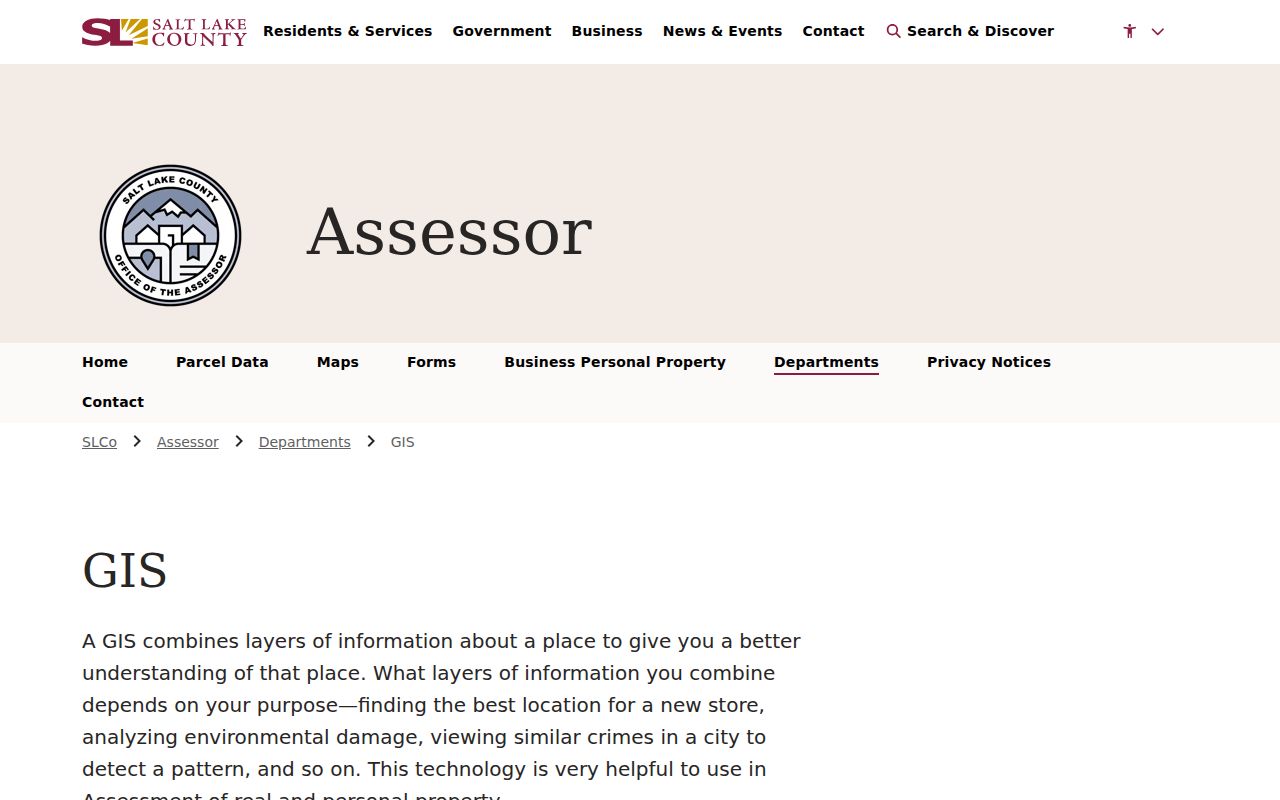
The captured county page shows the GIS route that complements the Assessor search. Identify the parcel for free, then buy Recorder access only when a deed chain, lien, plat, or recorded image is needed.
Do not confuse people and places. An owner, taxpayer, mailing recipient, and current occupant can be four different parties. Use the exact label shown by the source.
Millcreek Court Records in XChange
Millcreek Justice Court handles limited-jurisdiction matters, including class B and C misdemeanors, traffic, infractions, and small claims. Third District Court handles general civil matters, probate, domestic cases, class A misdemeanors, and felonies. Utah Courts XChange combines district and justice case searching, but case numbers are not unique statewide. Narrow the court, county, case type, and date range when possible.
The fields include Last Name or Company and an optional First Name. An asterisk in the first-name field returns variants and middle-initial forms. Results may show court, case type, case number, filing date, parties, and history links. The first two case-number digits indicate the filing year. Results stop at 500, so broad surnames need added scope.
The official XChange help and field examples show how those filters and results are arranged.
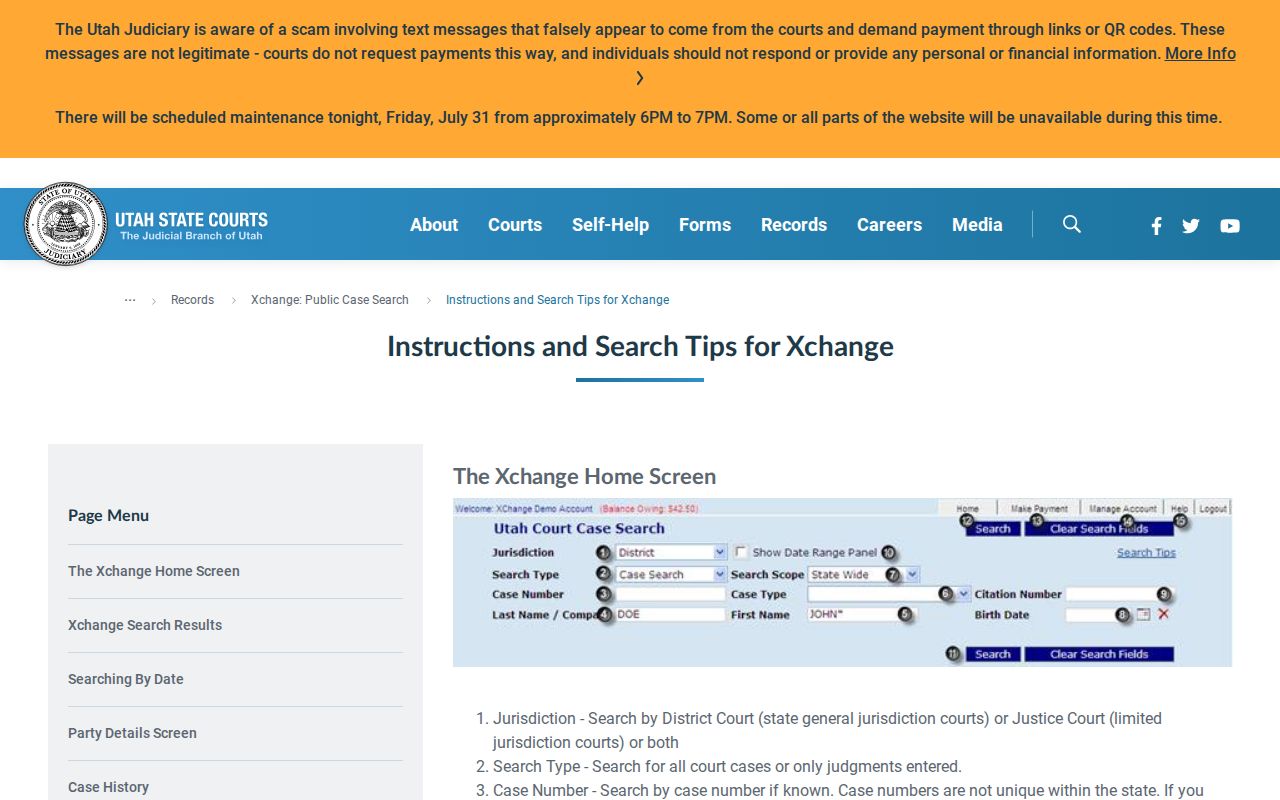
The image separates a case history from its documents. Online searches are paid, and public electronic documents cost $1 each. Most district courthouses and the Utah State Law Library offer free XChange access. Clerks issue plain or certified copies. Sealed, expunged, adoption, civil-commitment, and juvenile matters do not appear, and parts of some domestic proceedings are private. A missing result does not prove no case exists.
Millcreek Vital Records Have Limits
Salt Lake County Health and the Utah Office of Vital Records and Statistics issue Utah birth and death certificates. County health offices also issue statewide marriage and divorce abstracts for 1978 through 2010. A full marriage-license copy comes from the county where the license was filed. A certified divorce decree comes from the district court that granted it.
Under Utah Code §26B-8-125, births open after 100 years, deaths after 50, and marriages or divorces after 75. Recent certificates require identification and an eligible relationship or legal interest. Effective July 1, 2026, initial fees are $25 for a birth, $35 for a death, and $25 for a marriage or divorce abstract. Allow at least six weeks for mail processing.
An abstract contains limited facts and cannot replace a full license or decree. Utah State Archives provides public death-certificate and other name indexes after records reach public age, while Salt Lake County Archives supplies historical family-record paths.
Note: Check the event, custodian, record form, and legal purpose before paying, since certificate, abstract, license, and decree are distinct products.
Millcreek Permit Records Follow Addresses
Post-incorporation building and code files begin with the address, permit number, or concern reference rather than a resident-name index. The Millcreek Building Department publishes application, revision, status, and inspection controls. Initial plan review may take 14 business days, while accepted revisions may take five business days.
The city's building page shows the permit routes available for current Millcreek projects.
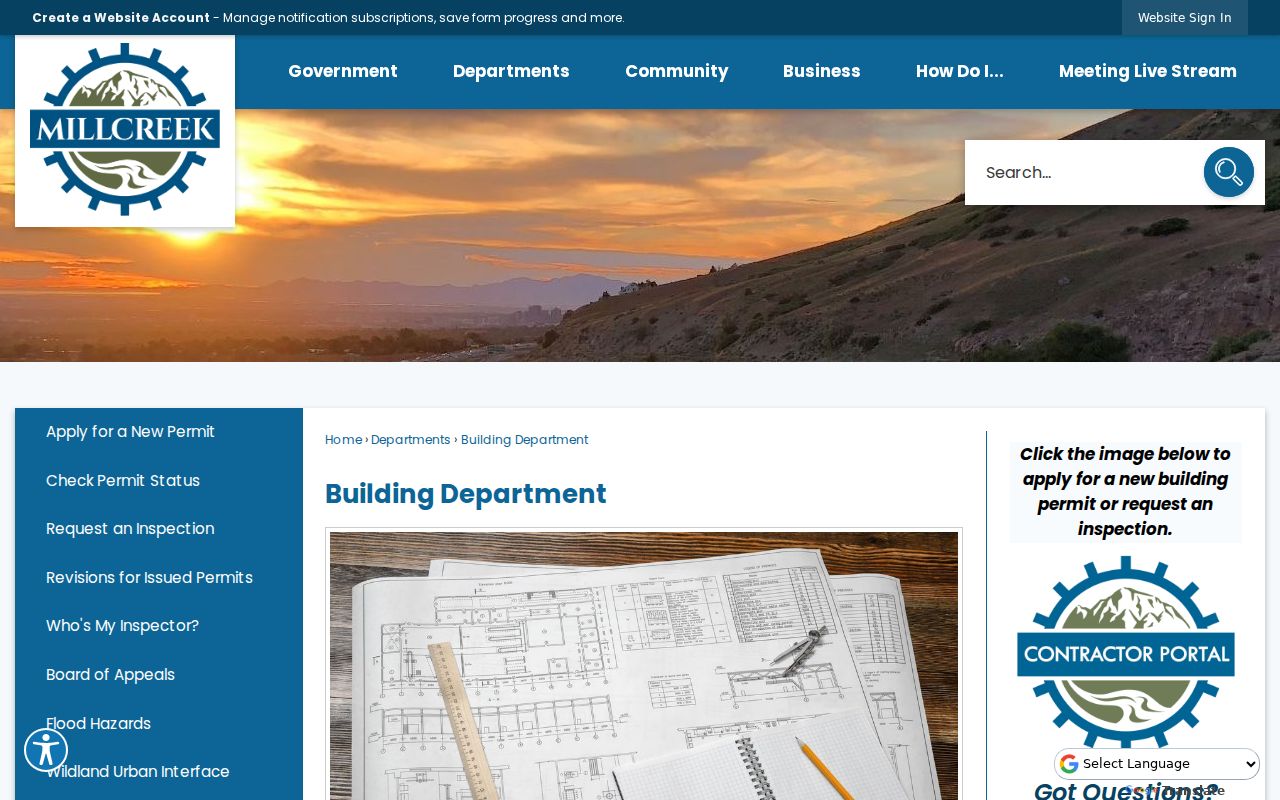
Permit records can identify an owner, applicant, contractor, project address, dates, and status when those portions are public. The vendor's public query fields were not fully captured, so an address or known permit number is safer than assuming a name search. Ask the county or County Archives about earlier files.
Code Compliance divides Millcreek into three service areas using Highland Drive, 3900 South, and 2300 East. That geography can narrow a request to the likely assigned unit. The city warns that a submitted concern may itself become a public record under GRAMA, though protected facts can still be withheld.
Millcreek Records Custodians and Portals
Send each request to the entity that retains the record. Millcreek cannot supply a county deed or state court file, and the Recorder does not issue a vital certificate. These contacts cover the principal city and county access routes documented for Millcreek.
Millcreek City Hall
1330 East Chambers Avenue
Millcreek, UT 84106
801-214-2700
City forms and GRAMA requests
Salt Lake County Recorder
2001 South State Street, Suite N1-600
Salt Lake City, UT 84190
385-468-8145
Recorder services and Data Services
Salt Lake County Assessor
2001 South State Street, N2-600
Salt Lake City, UT 84190
385-468-8000
Owner, address, and parcel search
Salt Lake Public Health Center
610 South 200 East
Salt Lake City, UT
385-468-4230
Vital-record services
City Hall, the Recorder, and Assessor are open weekdays from 8 a.m. to 5 p.m. The health center closes at 4:30 p.m. Confirm the service before visiting.
Custody and Registry Record Limits
The Salt Lake County Sheriff prisoner information system is the county-jail route. Utah Corrections maintains separate state offender and registry searches. Each is a current-status tool with its own scope. A booking or charge is not a conviction, and an old custody result should be checked against the court docket.
Police and incident requests should give the incident number, location, date, and requester status. Victim, juvenile, active-investigation, and safety facts may be redacted. Verify any claimed warrant with the issuing court or agency.
Old Millcreek Records Reach 1852
Salt Lake County Archives preserves county material from 1852 to the present. Its holdings include territorial clerk, assessor, treasurer, and governing ledgers, along with tax books, appraisal cards, building photographs, permits, health records, and later official files. These sources can add names and dated property context that a current parcel screen cannot show.
Utah State Archives adds death-certificate indexes, Third District probate files, and subject guides. Territorial Probate Court dockets span 1852 through 1887 on ten microfilm reels. Early volumes also contain some civil, criminal, and divorce proceedings.
Search prior surnames, initials, spelling variants, and older neighborhood terms. Tell the archive when an event predates Millcreek's incorporation. No online hit may mean an old jurisdiction, unindexed volume, or OCR variation.
Terms Behind Millcreek Record Access
Government databases describe different levels of proof. Read the label before drawing a conclusion from a hit, especially when two people share a name.
- Custodian
- The government entity that retains and responds for a record.
- Index
- A locator that lists enough facts to find a filing; it is not necessarily the filed document.
- Image
- A view of the actual scanned filing, which may still be uncertified.
- Certified copy
- A copy formally authenticated by the retaining office for the fact it certifies.
- Exemption
- A legal basis for withholding or redacting information that would otherwise be responsive.
A parcel roll names a taxpayer at a stated point. A deed shows a transfer, and a docket lists court events. For a common name, compare at least two stable details such as middle initial, age range, address, parcel, court, relative, license number, or filing role.
Note: Preserve the spelling, date, portal, field, and access level used, so another searcher can reproduce the result.
Utah GRAMA Fees and Appeals
Utah Code §63G-2-203 permits reasonable actual costs for copies, delivery, and certain compilation or redaction work. Inspection during normal hours is generally free. Waivers may serve the public interest or the requester's own record interests. An agency need not create a summary or convert data into a format it does not maintain.
Under §63G-2-204, a request must identify the requester, provide contact details, and describe the sought files with reasonable specificity. Response timing depends on statutory status, urgency, and any permitted extension, so consult the current provision rather than assuming one deadline fits all requests. Failure to respond within the applicable period operates as a denial.
A denial should identify the classification and appeal rights. The route begins with the chief administrative officer and varies by entity. Utah Code §63G-2-403 sets a 30-day appeal period. Narrower dates, departments, or file types can also cut time and cost.
Request Millcreek Public Records
For city-created files, the Millcreek forms page includes the GRAMA records-request form. Its captured fields ask for the requester's name, mailing address, phone, optional email, and a description of the records. The source page makes the correct city route visible.
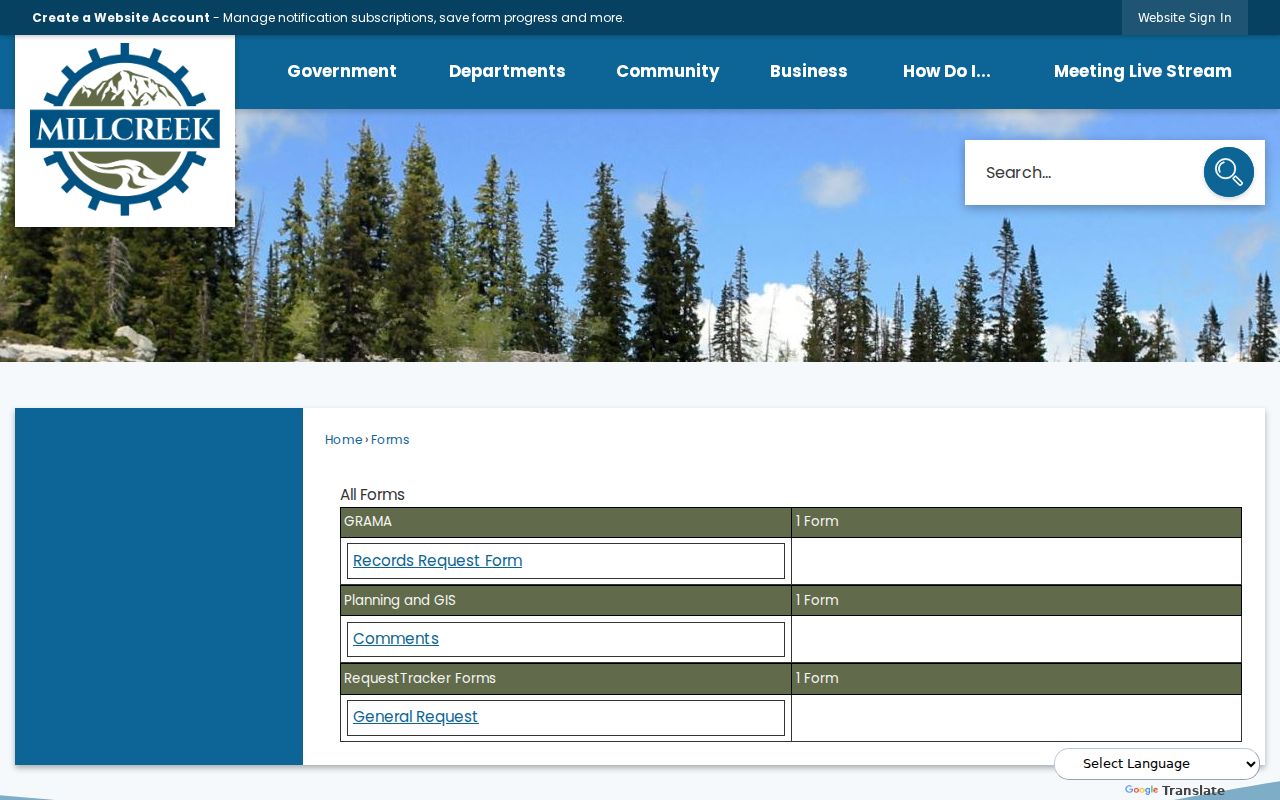
The form should ask for a record, not pose a general question. A date range, department, address, parcel, permit number, case number, and preferred existing format can make the request reasonably specific.
- Identify the custodian. Route city files to Millcreek, deeds to the Recorder, parcel data to the Assessor, court files to the clerk, and certificates to the proper vital-record office.
- Check the official index first. Save the instrument, parcel, permit, or case identifier that will let staff locate the file.
- Describe the exact records, date span, subject, department, and desired format. Ask for the segregable public portions if a file contains restricted material.
- Request a cost estimate before work exceeds a chosen amount. Distinguish portal charges, copy costs, and certification fees.
- Review the response or written denial. Narrow an overbroad request or use the stated appeal route within the applicable period.
Use records lawfully. Official access supports personal research and civic oversight. Never use a government record to stalk, harass, threaten, or harm another person.